
Why Data Center Electrical Contractors, Technicians and Equipment Operators Need Mission‑Critical Certification

Updated: Aug 26
The Stakes in Data Center Electrical Work
The stakes in data center electrical work are uniquely high. Any error — a loose termination, an incorrect breaker setting, a missed step during commissioning, or a deviation from manufacturer specifications — can lead to significant operational disruption.
Typically minor deficiencies can lead to catastrophic failures with new data centers being designed and operated at full load often within weeks of final commissioning.
In environments where digital infrastructure powers financial services, healthcare platforms, cloud computing, and critical enterprise systems, even a small mistake can have cascading consequences for the organizations relying on that infrastructure.

Electrical Systems: The Backbone of Every Facility
Electrical systems are the backbone of every data center facility. Power distribution equipment, switchgear, automatic transfer switches, uninterruptible power supplies (UPS), system controls and associated conductors must all operate flawlessly.
Because of this, facility owners, general contractors, and operations leaders place significant emphasis on working with electrical contractors and technicians who demonstrate the right technical training, safety credentials, and manufacturer-specific expertise to plan, install, test and operate these unique complex systems.
This article outlines the certifications and operational qualifications organizations should evaluate when selecting electrical partners for data center projects and ongoing maintenance.
Key Certifications to Evaluate
Organizations evaluating electrical partners for mission‑critical facilities should consider a range of certifications and qualifications that demonstrate both technical competency and operational discipline. These commonly include:
NFPA 70E electrical safety training
Manufacturer or OEM equipment certifications
OSHA compliance and documented safety programs
Arc flash analysis capability and labeling expertise
Lockout/Tagout (LOTO) procedure development and compliance
These credentials provide an important baseline for ensuring contractors and technicians can safely and effectively operate within high‑risk electrical environments such as modern data centers.
The Real Cost of Downtime
Downtime in modern data centers carries measurable financial risk. According to a 2024 outage analysis published by Xurrent, many IT outages now cost organizations well over $300,000 per incident, with large-scale outages often exceeding $1 million depending on the systems affected. Other industry analyses, such as reporting from Global Data Center Hub, show that large enterprise facilities can experience losses that reach hundreds of thousands of dollars per hour when mission‑critical infrastructure goes offline.
These numbers reflect more than just lost productivity. They include operational disruptions, regulatory exposure, recovery costs, reputational damage, and downstream impact on customers and partners. All of these impacts are exacerbated by the current climate of just-in-time supply chains of replacement parts and components that can exponentially raise the stakes on cost and time of repairs.
For organizations managing mission‑critical infrastructure, the qualifications of the electrical contractor and technicians responsible for installing and maintaining power systems therefore become a key operational decision.
NFPA 70E: The Safety Foundation
NFPA 70E, the Standard for Electrical Safety in the Workplace, establishes safety requirements for working around electrical hazards. The standard includes guidance for arc flash risk assessment, personal protective equipment (PPE), energized work permits, and lockout/tagout procedures.
Electrical contractors supporting data center environments should ensure their technicians are trained in accordance with the current edition of NFPA 70E. Because the standard evolves regularly, ongoing training and recertification are essential to maintaining compliance with updated safety procedures.
When evaluating an electrical contractor, organizations should ask whether all field technicians receive continuous NFPA 70E training and whether the company maintains internal safety programs that reinforce these standards in real‑world operational environments.
We recommend that safety training such as NFPA70E training be a baseline, where additional site specific and task specific hands-on training help to build operator confidence and muscle memory for reducing incidents and better reactions to unavoidable events.

Original Equipment Manufacturer (OEM) Certifications
Manufacturer certifications indicate that a contractor has received specialized training directly from equipment manufacturers to install, service, and maintain specific systems.
In data center environments, this training is particularly important because power distribution equipment is highly engineered and manufacturer‑specific. Switchgear, distribution systems, and protection equipment often have precise torque specifications, commissioning procedures, testing protocols, and warranty requirements.
For example, a contractor recognized by a manufacturer has demonstrated technical competency with that manufacturer’s systems. These partnerships often require ongoing training, periodic evaluation, and demonstrated performance on real projects.
Working with technicians trained on the specific equipment installed in a facility helps reduce installation risk and ensures manufacturer specifications are followed throughout the lifecycle of the system.
Such involvement of the OEM throughout the life of the equipment also provides a strong channel to upgrades, repairs and retrofits as needed.
OSHA Compliance and Safety Performance
Workplace safety performance is another critical factor when evaluating electrical contractors.
Organizations should look for companies that maintain strong Occupational Safety and Health Administration (OSHA) compliance records and formal safety management programs. Contractors should also be able to demonstrate documented safety training for all field technicians.
One commonly used benchmark is the Experience Modification Rate (EMR). An EMR below 1.0 indicates a company performs better than the industry average in terms of workplace safety and incident prevention.
In data center environments, strong safety practices help protect both personnel and infrastructure. Companies that maintain disciplined safety cultures are less likely to experience incidents that could damage equipment or disrupt operations.

Arc Flash Analysis and Labeling
Arc flash events represent one of the most serious hazards in electrical environments. An arc flash can release extremely high levels of energy in a fraction of a second, generating intense heat, pressure, and light.
Qualified electrical contractors, technicians and equipment operators should have the capability to perform arc flash hazard analysis using standards such as IEEE 1584 and NFPA 70E. This analysis determines incident energy levels and establishes appropriate protection boundaries for technicians working near energized equipment.
Following the analysis, contractors should apply compliant arc flash warning labels and ensure technicians and operators understand how to work within the established safety parameters.
This capability demonstrates that the contractor understands not only how to install equipment, but also how to maintain and service it safely over the life of the facility.
Having an independent third party performing a review of the power study and the field labeling is also recommended.
Lockout/Tagout (LOTO) Procedures
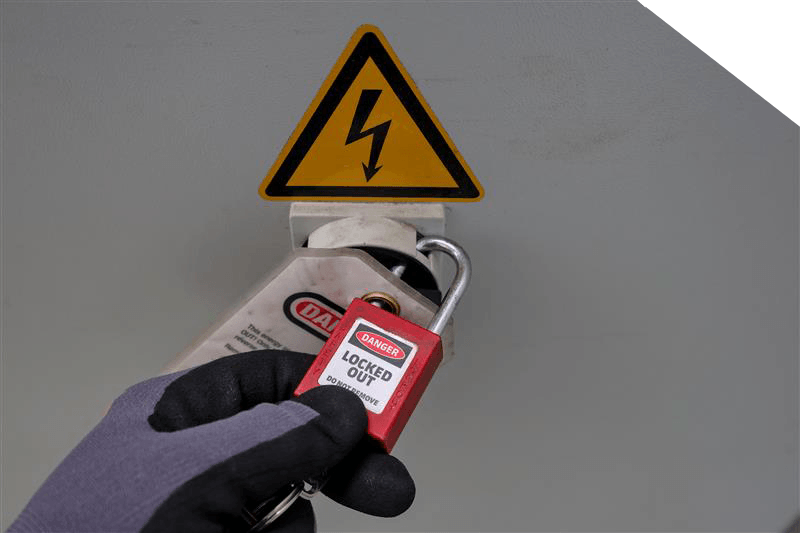
Lockout/tagout procedures ensure electrical equipment is properly de‑energized before maintenance or service work begins. In complex power environments such as data centers, where redundant power paths may exist, proper LOTO procedures are essential.
A qualified technician should maintain documented procedures and train technicians to follow them consistently. In many cases, contractors will also help develop site‑specific LOTO procedures that align with the facility’s power architecture.
Well‑implemented LOTO processes significantly reduce the risk of accidental energization during maintenance activities when typical power paths can be altered manually and autonomously.
Long‑Term Partnership and Organizational Stability
Technical qualifications are only one part of evaluating an electrical partner. Organizations responsible for mission‑critical infrastructure also consider the long‑term reliability and stability of the companies they work with.
Data center electrical projects often involve extended timelines, complex commissioning processes, and long‑term service relationships. For that reason, facility operators typically look for partners with strong operational history, growing teams, and clear investment in training, equipment, and safety systems.
Indicators of stability can include years in operation, geographic service coverage, workforce size, and evidence of continued investment in technician development and operational capability.
What This Means for Your Next Data Center Project
However electrical contractors are selected for a project — whether through a competitive bid process, a preferred vendor relationship, or a negotiated partnership — certifications and safety credentials provide valuable insight into a contractor’s operational maturity.
Organizations evaluating electrical contractors should look for partners whose technicians maintain current NFPA 70E training, who maintain strong safety programs, who hold manufacturer certifications relevant to the facility’s equipment, and who demonstrate the ability to perform specialized services such as arc flash analysis and LOTO procedure development.
In mission‑critical environments, experience, training, and disciplined operational processes help ensure that electrical systems are installed and maintained with the level of reliability these facilities require.