
How to Evaluate a Critical Power Solutions Partner for Data Center Projects

Updated: Aug 31
Selecting a critical power solutions partner for a data center project is one of the highest-stakes decisions a facility manager, procurement director, or data center operator can make. Unlike a general electrical contractor who pulls wire and installs conduit, a critical power systems integrator is responsible for the design engineering, systems integration, commissioning, and long-term reliability of the infrastructure that keeps your facility running.
If they get it right, your power systems operate seamlessly through decades of load growth, technology transitions, and capacity expansions. If they get it wrong, the consequences range from costly redesigns to catastrophic downtime in a facility where a single unplanned outage can cost hundreds of thousands of dollars.
This guide provides a structured evaluation framework for data center buyers who need to choose a critical power solutions provider with confidence. Use it as a checklist during your RFP process, partner interviews, and final selection.
Why a Systems Integrator, Not Just a Contractor?
A mission critical power engineering firm does more than install equipment. They serve as the single point of accountability for design, engineering, integration, commissioning, training, and ongoing maintenance of your entire power infrastructure down to the component level. They coordinate between OEMs, contractors, and your operations team to ensure every component works together as a unified, reliable system. When evaluating partners, the criteria go far beyond a standard contractor checklist.
Evaluation Criteria 1: Design Engineering Capability
The foundation of any successful data center power project is the engineering behind it. A qualified critical power systems integrator should have in-house design engineering capability, not just the ability to install someone else’s design. This means professional engineers who understand power path design, redundancy configurations, and the specific electrical architecture requirements of Tier II, III, and IV data center facilities.
What to verify: Does the partner have licensed Professional Engineers (PEs) on staff? Can they provide meaningful participation for the overall design and especially the Engineer of Record with mission critical power architecture services including power path design, redundancy analysis, and load flow studies? Do they have a track record for interfacing with the anticipated Utility provider, the generator OEM, the UPS OEM and any Electrical Power Monitoring System (EPMS) involved in the project? Do they have experience with both greenfield data center builds and brownfield modernization projects? Can they design scalable power integration solutions that accommodate future load growth from AI workloads and high-density computing?
A strong critical power solutions provider will speak fluently about N+1 and 2N redundancy, concurrent maintainability, fault tolerance, and how to engineer power distribution systems that handle the unprecedented demands of GPU-intensive AI infrastructure. They should be able to show you examples of data center power distribution integration projects where their engineering drove the design, not just the installation.
Evaluation Criteria 2: OEM Relationships and Equipment Expertise
Data center power infrastructure relies on specialized equipment from major OEMs including switchgear, switchboards, power distribution units, automatic transfer switches, and uninterruptible power supplies. Your critical power systems integrator should have deep, established relationships with the OEMs whose equipment is in your facility.
What to verify: Which OEMs does the partner represent or have certified relationships with? Are their technicians trained on the specific switchgear and switchboard platforms in your facility, such as Siemens, Eaton, Schneider Electric, or ABB? Can they provide medium voltage power systems integration services for the primary distribution feeding your facility? Do they have expertise across the full range of power distribution equipment, from medium voltage switchgear on the utility side to the switchboards and distribution panels inside the data center?
Go beyond company-level certifications. Ask how many of their field technicians hold individual OEM certifications. A company may claim Siemens certification, but if only two of their twenty technicians are actually trained on your specific equipment platform, that certification is meaningless when those individuals are assigned elsewhere. The best data center power integration companies maintain deep benches of OEM-certified technicians across multiple equipment platforms.
Evaluation Criteria 3: Commissioning and Startup Expertise
Commissioning is where a critical power solutions partner proves their value most clearly. This is the process of systematically verifying that every component of your power infrastructure performs as designed, individually and as an integrated system, before your facility goes live. It is arguably the most technically demanding phase of any data center project.
What to verify: Does the partner provide comprehensive data center commissioning support services, including integrated systems commissioning support? Can they support the full commissioning lifecycle from factory acceptance testing through site acceptance testing to operational readiness and training? Do they have experience with mission critical facility startup services for both new construction and modernization projects? Can they perform electrical testing and commissioning across medium voltage, low voltage, and control systems? Do they have a robust presence that can support your project if the construction schedule changes?

A qualified mission critical commissioning consultant will have a documented commissioning methodology, experienced commissioning agents, and the ability to coordinate testing across all building systems. They should be able to provide references from data center operators who can speak specifically to the quality and thoroughness of their commissioning and startup support, including their ability to manage complex energization sequences without disrupting adjacent live environments.

Evaluation Criteria 4: Training Programs and Safety Culture
In mission-critical environments, the quality of your partner’s training programs and safety culture is a direct indicator of operational excellence. This goes well beyond basic OSHA compliance. A true critical power solutions provider invests heavily in workforce development because they understand that the people performing the work are the ultimate determinant of project quality and facility safety.
What to verify: Does the partner offer NFPA 70E electrical safety training for their own technicians and for your facility personnel? Do they have dedicated training facilities, such as a training center of excellence for arc flash scenarios and lockout/tagout procedures? What is their Experience Modification Rate (EMR)? An EMR below 1.0 indicates better-than-average safety performance. Do they provide critical facility electrical training courses that go beyond their own workforce to include data center owners, field service technicians, and other personnel who work in the facility?
The strongest partners in this space view training as a core service line, not an afterthought. They offer advanced electrical training packages that cover not just safety compliance but also the technical skills needed to operate and maintain complex power systems. Companies that invest in electrical workforce development programs, including apprenticeships, military veteran recruitment, and ongoing technical certification, consistently field more capable and committed project teams.
Evaluation Criteria 5: Maintenance and Reliability Services
The relationship with your critical power solutions partner should not end at commissioning. The ongoing maintenance, diagnostics, training and reliability engineering of your power infrastructure is where long-term value is created or destroyed. A partner who designed and commissioned your systems is uniquely positioned to maintain them because they understand the engineering intent behind every configuration.
What to verify: Does the partner offer mission critical electrical maintenance programs with documented preventative maintenance schedules? Can they provide 24/7 critical power support services for emergency response? Do they perform power system diagnostics and repair, electrical reliability audits, and power system condition assessments? What is their switchgear maintenance and medium voltage maintenance capability?
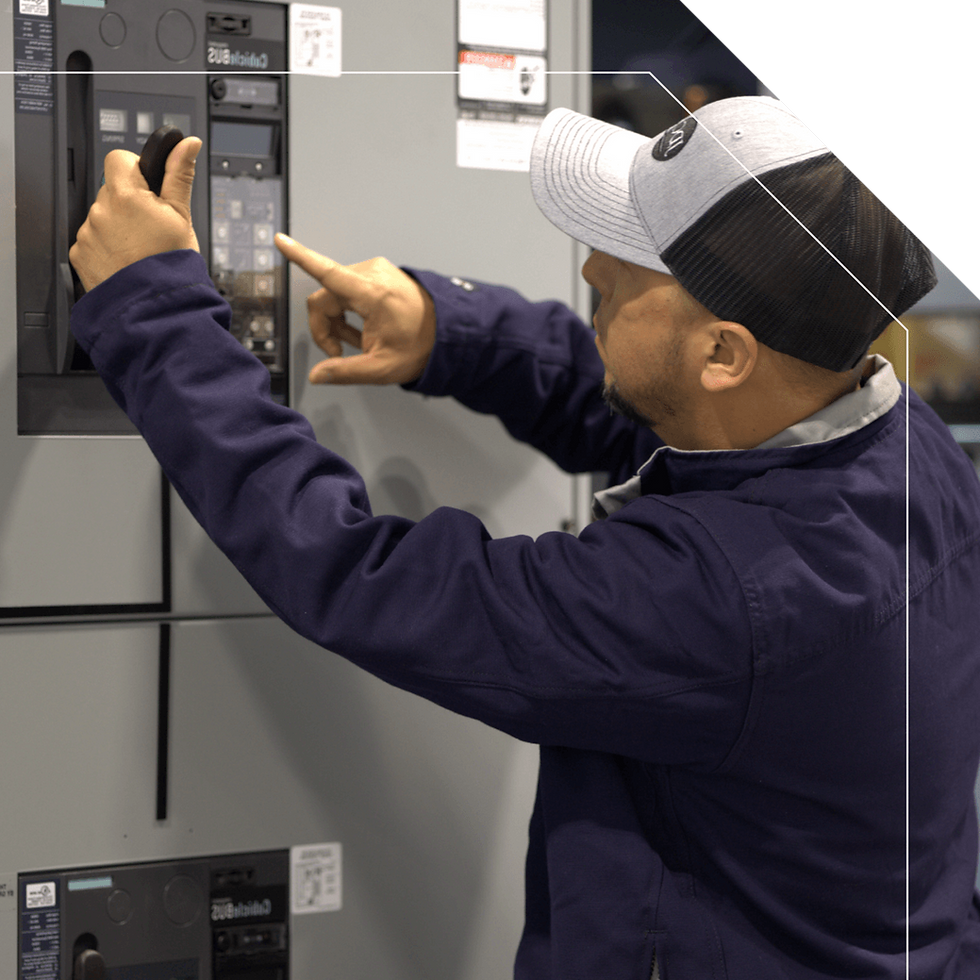
Look for partners who offer structured data center maintenance programs with tiered service levels. The best critical infrastructure electrical maintenance providers use predictive analytics, infrared scanning, partial discharge monitoring, and other condition-based maintenance techniques to identify problems before they cause failures. They should also be able to provide electrical risk assessments and electrical asset management services that help you prioritize capital investments across your facility portfolio.

Evaluation Criteria 6: Financial Stability and Scale
Data center power projects are often multi-year engagements with significant ongoing maintenance obligations. Your partner’s financial stability directly affects their ability to complete your project, honor warranties, staff your maintenance program, and provide long-term support through equipment lifecycle transitions.
What to verify: How long has the company been operating in the critical power space? What is their current employee count, and are they growing or contracting? What is their ownership structure? A partner backed by institutional capital, such as private equity investment, has undergone professional due diligence on their financial health, operational systems, and growth trajectory. What is their bonding capacity for large-scale data center infrastructure projects?
Also evaluate their geographic reach. A power systems integration firm with multiple service locations can provide local responsiveness for your facility while drawing on national resources for major projects. This matters significantly for data center operators managing facilities across multiple markets. A partner who claims nationwide coverage but operates from a single office will be subcontracting work in markets where they lack permanent staff, introducing quality and consistency risks.
Evaluation Criteria 7: Project Management and Integration Coordination
The role of a critical power systems integrator goes beyond technical execution. They serve as the coordination hub between your internal team, the general contractor, equipment manufacturers, and other trades. This requires sophisticated project management and a deep understanding of how data center construction and modernization projects flow.
What to verify: Who will be your day-to-day project manager, and what is their data center experience? Does the partner use professional project management tools and processes for scheduling, change management, and reporting? How do they coordinate between OEM equipment deliveries, contractor installation schedules, and commissioning timelines? Can they show examples of managing multi-phase data center infrastructure projects with minimal disruption to ongoing operations

The best data center systems integration partners will demonstrate a proven coordination methodology that minimizes risk and keeps complex projects on schedule. Ask specifically about their experience managing concurrent work in live data center environments, where a single coordination failure can take down production systems.

Evaluation Criteria 8: References and Track Record
Finally, verify the partner’s claims by speaking directly with their data center clients. Ask references specifically about the partner’s performance across the full lifecycle: design engineering, integration, commissioning, and ongoing maintenance. A strong critical power solutions provider will have long-term client relationships, not just one-time project references.
Key questions for references: Did the partner deliver on their design engineering commitments? How thorough was their commissioning process? How responsive are they for ongoing maintenance and emergency support? Did they coordinate effectively with other trades and your internal operations team? Would you engage them again for your next data center project?
The Evaluation Scorecard
Use the following framework to score each critical power solutions provider you are evaluating on a scale of one to five across all eight criteria. Weight the criteria according to your specific priorities, but for most data center projects, design engineering capability, commissioning expertise, and OEM relationships should carry the heaviest weight.
Evaluation Criteria | Weight | Score (1-5) | Weighted |
Component Selection & Design Engineering Capability | High | ||
OEM Relationships & Equipment Expertise | High | ||
Commissioning & Startup Support Expertise | High | ||
Training Programs & Safety Culture | Medium-High | ||
Maintenance & Reliability Services | Medium-High | ||
Financial Stability & Scale | Medium | ||
Project Management & Integration Coordination | Medium | ||
References & Track Record | Medium |
A critical power solutions provider who scores well across all eight dimensions is not just a vendor. They are a strategic partner who will protect your facility’s uptime, safety, and long-term operational performance through every phase of your data center’s lifecycle, from initial design through decades of operation, modernization, and growth.